
Heated Driveways
Snow Melting Systems In Oakville
Never shovel another winter. Hydronic and electric snow melting systems for driveways, walkways and entrances, engineered for Halton winters and tied into your home's heating.
Never shovel another winter. Hydronic and electric snow melting systems for driveways, walkways and entrances, engineered for Halton winters and tied into your home's heating.
If you've spent more than one winter chipping ice off your front steps or wrestling a snowblower up a steep driveway, you've earned the right to consider a heated driveway. Snow melting systems use radiant heating installed beneath the surface to automatically melt snow and ice on driveways, walkways and entrances, no shovel, no salt, no slip risk for the people you love.
We design and install both hydronic and electric systems across Halton, integrated with your home's existing boiler or on a dedicated unit. Most projects get planned during the construction or resurfacing stage, but retrofits are possible too.
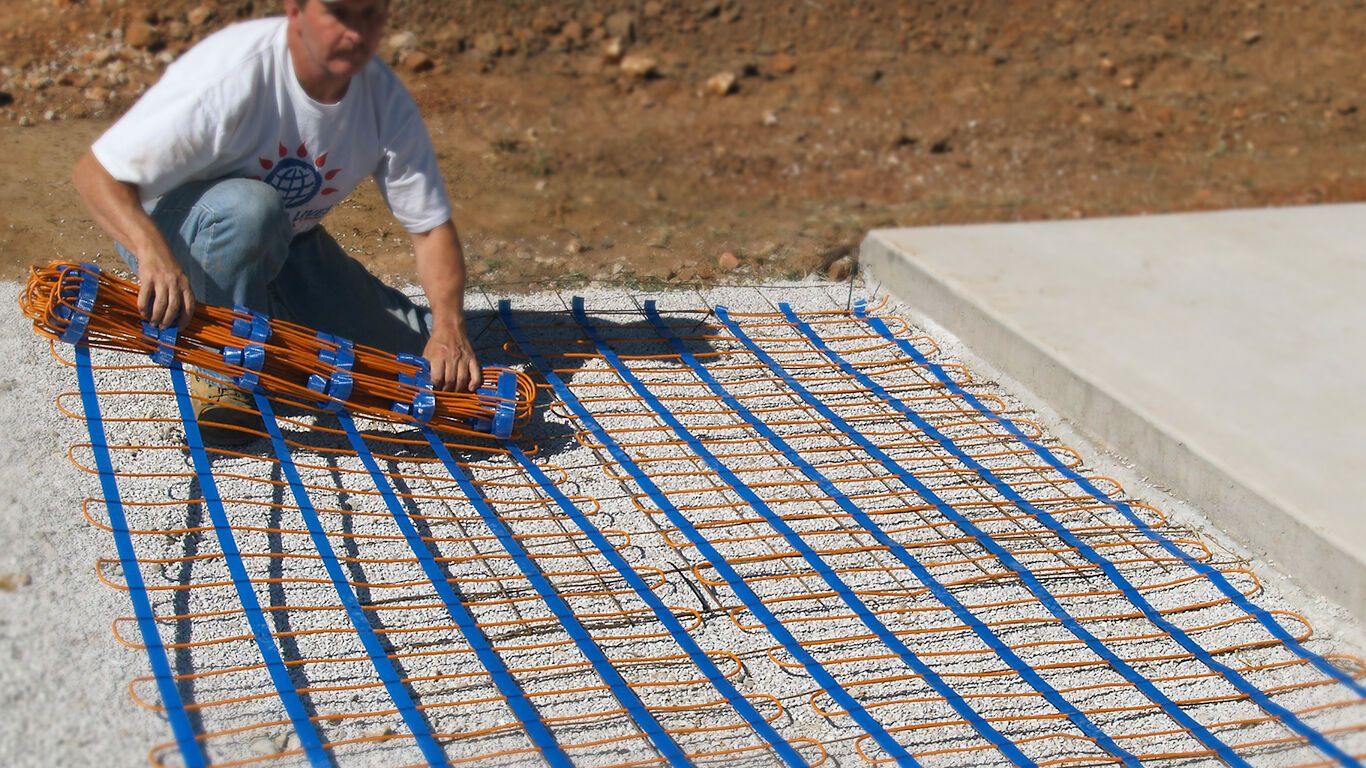
The most common (and most efficient) approach for a full driveway. We lay PEX tubing in a serpentine pattern under your concrete, asphalt, pavers or stone, then tie it back to a boiler or heat exchanger. Antifreeze-rated fluid circulates through the loops, automatically activating on a snow/ice sensor.
For smaller areas, front entry steps, a single walkway, a wheelchair ramp, electric mats are usually the cleaner install. No boiler, no plumbing, just heating cable in mortar or sand bed.
If you're pouring a new driveway, doing a major reno, or building custom, this is the right time to talk to us. Retrofits are possible but cost more, coordinating with your concrete or paving contractor is far cheaper.
Environment Canada averages give Oakville and Burlington around 110–140 cm of snowfall per year, but the design number that matters is peak snowfall rate during a single storm, not seasonal totals. We design Halton driveways for 2 inches per hour with 25 mph wind at -10°C, that works out to roughly 150 BTU per square foot for an open driveway, 175 BTU per square foot for an exposed one (no garage shelter, north-facing, or near the escarpment in Milton). Undersizing here is the most common mistake we see on snow melt systems installed by general contractors: the system runs full-tilt but never catches up during a real storm.
Concrete is the most efficient surface for snow melt: dense, high thermal conductivity, fast response. We embed 1/2-inch PEX-A tubing at 9-inch spacing in 4-inch concrete with #4 rebar mat above the tubing. Asphalt works, but the tubing has to be installed in a sand cap below the asphalt because the hot asphalt mix (~150°C) would damage PEX. Pavers and natural stone are the trickiest, the joints lose heat to wind, so we run tubing tighter (6-inch spacing) and oversize the supply temperature. We coordinate directly with your concrete or paving contractor so the install sequence works.
The cheapest snow sensors (single-stage thermostats that trigger below a set temperature) waste energy by running on cold dry days. We default to a Tekmar 654 or Watts SS-3 sensor that detects actual precipitation plus temperature, only firing the system when there's snow falling and the slab is below 4°C. For driveways used by elderly or mobility-limited family members, we add Idle Mode that holds the slab at 0°C overnight from December to March, so a sudden storm doesn't need a 4-hour warm-up to start clearing. Idle mode roughly doubles winter operating cost but eliminates morning surprises.
Snow melting available in: Oakville · Burlington · Milton · Halton Hills · Mississauga · Hamilton · Brampton
Our trucks roll out of our Oakville shop and reach across the western GTA. Tap any city for local details, response time, permit office, neighbourhoods, and city-specific FAQs.
A typical double driveway (700–999 sq.ft.) runs about $18,000–$32,000 installed for a hydronic system, including the dedicated boiler and snow/temperature sensor. Smaller entry-and-step electric systems start around $2,200. The wide range comes from boiler choice (existing system tie-in vs dedicated unit) and driveway surface, see our in-floor heating page for the related hydronic technology.
Yes, these systems are designed for our climate. The key sizing inputs are BTU/sq.ft. (typically 125–175 in southern Ontario) and snow/ice sensor type. Properly sized, the system can clear an active storm at the rate it falls. We design for the same Halton snow loads we account for on custom home mechanical packages.
About $4–$8 per snow event for a typical double driveway, depending on duration and temperature. With idle protection on, expect $25–$60/month during winter. Far cheaper than salt damage to concrete and stamped pavers, and obviously safer.
Only by removing and re-laying the surface. We always recommend installing during a new pour or driveway replacement, retrofitting under an existing asphalt or concrete driveway means tearing it out anyway, so the marginal cost of adding heat is much lower at that moment. Talk to us early in your driveway-resurfacing planning.